NOMAD AI Review 2026: $17 Travel Agency in Just 60 Seconds?
Editor & Lead Reviewer, ToolsProZone
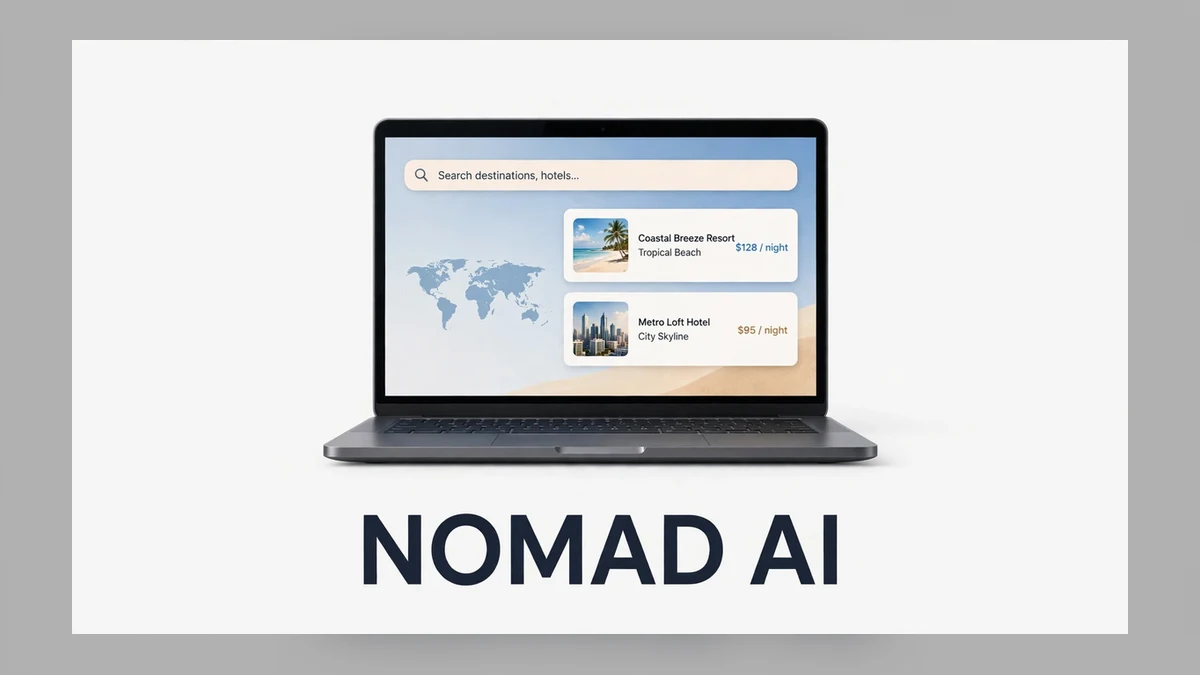
A travel agency in 60 seconds. That is the promise. NOMAD AI says it builds you a branded travel booking website. It stocks the site with hotels, flights and car hire. Then it connects everything to your affiliate accounts. You just name it and go live.
It sounds like the easiest online business ever sold. And in one sense it is. The setup really does look simple. But a website is not a business. A business needs visitors, bookings and trust. None of that comes in the box.
So we looked past the launch hype. We read the independent reviews. We checked the pricing against two sources. Then we pulled apart the guarantee, the upsell funnel and the claims that do not quite add up. Here is what we found.
Disclosure: We may earn a commission if you buy through our links, at no extra cost to you. That never changes what we write. If a product has a weakness, we say so.
How we reviewed it: We did not run NOMAD AI ourselves. This review is based on the vendor’s own sales page and demo. It also draws on independent reviews from The Product Oasis and GlobalBuyReview, checked on 28 November 2026. Where the sources disagree, we say so instead of picking the friendlier number.
NOMAD AI is a cloud-based tool from Art Flair. It builds a travel affiliate website in about a minute, pre-loaded with over a million hotels, 4,000 airlines and 50,000 attractions. You connect your own affiliate accounts and earn when visitors book. The front end launched at $17, but the sales page shows no fixed price, and traffic is your job.
What Is NOMAD AI?
NOMAD AI is a cloud-based platform from vendor Art Flair. It launched on 11 July 2026. The idea is simple: instead of building a travel affiliate website piece by piece, you get the whole thing done for you.
You pick a name for your agency. The platform builds the site on its own cloud servers. It loads the inventory. It wires in your affiliate links. Hosting is included, so there is nothing to install and no WordPress to configure.
Let us be clear about one thing, though. This is not a travel agency in the normal sense. You do not sell travel. You do not take bookings yourself. You run an affiliate website that sends visitors to booking platforms, and you earn a commission when they book. The vendor’s wording is looser than that. The business model is not.
The inventory is the headline feature. Every site launches stocked with more than a million hotels and apartments. It also lists over 4,000 airlines, more than 100,000 car rental services and 50,000-plus attractions, plus restaurants and tours. Those are the vendor’s figures, repeated by both independent reviews we read. No reviewer we found counted the listings themselves, so treat them as vendor claims, not audited facts.
There is also an AI blog module. It writes and publishes destination content for you, things like “Top 10 Places in Europe” lists, with your affiliate links already embedded. The goal is search traffic over time. Whether Google rewards that kind of auto-published content is a separate question, and we come back to it below.
Key Features
- 60-second setup. Name your agency and the platform builds the site. No hosting to buy, no plugins, no code. This is the vendor’s claim, and the demo video walks through it.
- Pre-loaded global inventory. Hotels, flights, car hire, attractions, restaurants and tours, all linked to your affiliate ID from the start.
- Your affiliate accounts, your commissions. The demo shows connecting a Booking.com affiliate ID so bookings track back to you. You need your own affiliate accounts approved first. That step is yours, not the software’s.
- DFY Blog Builder AI. The platform auto-writes and publishes travel content with affiliate links built in, aimed at bringing in organic traffic.
- Hosting included. The site lives on the vendor’s cloud. You do not pay a host separately while the launch offer lasts.
- Commercial licence included. You can build travel sites for clients as well as for yourself, which opens a second way to earn from it.
- Multiple income streams. Beyond booking commissions, the vendor points to banner ads, AdSense and extra affiliate programs on the same site.
- Step-by-step training. Video walkthroughs cover setup and use, aimed squarely at beginners.
- “Free daily traffic.” The vendor claims free traffic is sent to your site every day. No source we found could verify what that traffic is, where it comes from, or how much of it arrives. Treat it as marketing until proven otherwise.
How It Works
The workflow has five steps, and honestly, the first four are the easy part.
Step 1: Create your agency. You log in, name your travel agency, and the platform generates the website on its cloud servers. No hosting, no WordPress, no theme to pick.
Step 2: Connect your affiliate details. You add your affiliate IDs. The demo walks through connecting a Booking.com ID. This is the step that decides whether you ever get paid, so do not rush past it. If your Booking.com affiliate application is not approved, the listings still show, but the commissions do not come to you.
Step 3: The inventory loads. Hotels, flights, attractions, restaurants and car rentals fill the site, already connected to your affiliate links. This is automatic.
Step 4: AI writes the content. The blog module starts publishing destination articles and “Top 10” style posts to keep the site fresh and, in theory, attract search visitors.
Step 5: Promote the site. This is where the 60-second story ends. You need visitors. You need them from search, social media, email or paid ads. The platform gives you a site. It does not give you an audience.
The Price Problem: No Fixed Price on the Sales Page
Here is the first thing that should make a careful buyer pause. The sales page does not publish a fixed price. It sells a “one-time fee” pitched against a $997-a-month comparison value, with the price rising during the launch window.
So what does it actually cost? The Product Oasis reports a $17 launch price for the front end. GlobalBuyReview, which studied the same sales page, could not find a fixed number on it at all. Both reviews agree on the direction: the price goes up during launch, and after launch the product converts to a recurring subscription.
That matters for two reasons. First, you cannot budget precisely until you reach checkout. Second, the “one-time payment” framing only holds during the launch window. Buyers who assume they are paying once, forever, should read the checkout page carefully before paying.
There is also a reported coupon code, NOM5, worth $5 off. It comes from GlobalBuyReview and may already be stale. Do not count on it.
Pricing (Checked 28 November 2026)
Prices below come from The Product Oasis, which published the full funnel, cross-checked against GlobalBuyReview. The launch window opened 11 July 2026, so these are launch-period figures. The sales page itself shows no fixed price, so checkout is the final word.
Front end: NOMAD AI — $17 (launch price). The complete cloud platform: agency builder, full inventory, AI blog content, hosting, commercial licence, training and the money-back guarantee.
| Upgrade | Price | What it adds |
|---|---|---|
| OTO 1 — Pro | $67 | Unlimited usage and websites, lead generation, DomainRack builder, funnel builder, graphics editor, autoresponder |
| OTO 2 — Enterprise | $197 | Done-for-you websites, affiliate and CPA campaigns, email and social campaigns, landing pages |
| OTO 3 — DFY | $97 | AI Article Wizard, Smart AI Editor, AI Rewriter, SEO Content Engine, video and funnel templates |
| OTO 4 — Reseller | $167 | Sell NOMAD AI itself and keep the profits, with sales pages, sales video and email swipes |
| OTO 5 — IMX | $97 | Extra apps: ContentPress, Profit Enigma, AgencyPress, TrafficMate |
| OTO 6 — White Label | $297 | Rebrand the platform as your own, use your own domain, keep 100% of revenue |
Full funnel: $939 if you buy everything ($17 + $67 + $197 + $97 + $167 + $97 + $297). That is the honest all-in number. The front end alone is enough to launch a site. The upsells mostly matter if you plan to run many sites, sell to clients, or resell the software itself.
One more number deserves a warning. The vendor stacks the “total value” of everything included at $26,993. That is promotional framing, not an appraisal. Nobody would pay $26,993 for these pieces separately, and the figure should not anchor your decision.
Launch price reported at $17 — the sales page shows no fixed price, so confirm the current price at checkout.
The Guarantee Gap: 30 Days or 365?
A money-back guarantee is only as good as its terms. Here the terms do not agree with each other.
One part of the sales page references a 30-day guarantee. The closing section references up to 365 days. GlobalBuyReview flags the mismatch, and adds a detail that matters more: the guarantee is described as conditional. The buyer is expected to show they tried the product and contacted support before qualifying.
We could not verify a clean, unconditional refund promise from any independent source. That does not mean refunds never happen. It means you should read the exact refund terms on the checkout page before you pay, and save a copy. If the guarantee is part of why you are buying, confirm which version applies to you.
The Traffic Problem: The Part Most Buyers Miss
This is the honest centre of the review. A travel affiliate site earns nothing without visitors. NOMAD AI builds the site. It does not bring the visitors.
Three things make this harder than the sales page suggests. First, the “free daily traffic” claim is unverified. No reviewer we found could say where that traffic comes from or how much of it converts. Plan as if it does not exist.
Second, every buyer gets the same inventory. Your site lists the same million hotels as the next buyer’s site. If two hundred people launch the same tool, the listings cannot be what sets you apart. Your content, your branding and your marketing have to do that work.
Third, the AI blog content is a double-edged tool. Auto-published destination lists can fill a site fast. But thin, generic AI content is exactly what search engines have spent the last two years devaluing. A site full of it may rank slowly, or not at all. The blog module is useful for keeping a site fresh. It is not a traffic strategy on its own.
None of this makes NOMAD AI a bad tool. It makes it a tool, not a business. The buyers who do well with it will already have a plan for traffic. That means SEO, social media, email, or a travel audience they can reach. If you have no plan for visitors, $17 buys you a nice website that nobody sees.
The “100+ AI Models” Claim
The sales page says NOMAD AI is powered by GPT-5.5, Claude 4.6, Gemini 3.1 and Grok-2, plus over 100 AI models. That list deserves a second look.
There are no public AI models by those names. GPT-5.5, Claude 4.6, Gemini 3.1 and Grok-2 do not exist as released products from OpenAI, Anthropic, Google or xAI. They are vendor labels, not specifications. The platform may well use real AI models behind the scenes. But the names on the sales page tell you nothing about which ones, or how good the output is.
Judge the tool by what it produces, not by the model names on the box. Watch the demo video. Look at the sample sites. If the content reads well and the listings work, the label does not matter. If it does not, no model name will save it.
NOMAD AI vs Travelio
Readers of this site may recognise the concept. We already reviewed Travelio, another AI travel affiliate site builder with the same $17 launch pattern and the same 60-second promise. The two tools are close cousins, so here is how they line up.
| NOMAD AI | Travelio | |
|---|---|---|
| Creator | Art Flair | Vendor launch, 2026 |
| Launch price | $17 | $17 |
| Core promise | Travel affiliate agency in 60 seconds | Travel affiliate sites in 60 seconds |
| Inventory | 1M+ hotels, 4,000+ airlines | Hotels, flights, tours, activities |
| Full funnel | $939 (6 OTOs) | $572.65 (8 OTOs) |
| Hosting | Included | Included |
| Main open question | Price not shown; guarantee terms conflict | Domain ownership and renewal terms unclear |
If you are choosing between them, the deciding factor is probably the funnel. NOMAD AI’s all-in cost runs higher. Travelio’s cheaper funnel comes with its own unanswered questions about domains. You can browse the rest of our reviews in the AI tools directory to compare more options.
Pros
- Genuinely fast setup — a working travel site in about a minute, with no technical skill needed.
- Big pre-loaded inventory across hotels, flights, cars and attractions, all linked to your affiliate ID.
- Hosting and a commercial licence are included in the front end, so the $17 entry covers the basics.
- Travel is a real evergreen market: people book trips all year, not just in one season.
- The AI blog module keeps the site fresh without you writing every post by hand.
Cons
- No fixed price on the sales page — you only learn the real price at checkout, and it rises during launch.
- The guarantee contradicts itself (30 days in one place, 365 in another) and appears to be conditional.
- “Free daily traffic” is unverified, and traffic is the whole business — without visitors there are no commissions.
- Every buyer gets the same inventory, so your site starts out identical to every other NOMAD AI site.
- The “100+ AI models” list names models that do not publicly exist (GPT-5.5, Claude 4.6, Gemini 3.1, Grok-2).
- The $26,993 “total value” figure is inflated launch marketing, not a real price comparison.
- After launch, pricing reportedly converts to a monthly or yearly subscription — the long-term cost is not spelled out upfront.
- Testimonials are vendor-selected, and the vendor’s own disclaimer says they show exceptional results, not typical ones.
Who It’s For
Affiliate marketers who want to test the travel niche without building a booking site from scratch. If you already promote offers and want an evergreen niche next to them, this is a cheap test.
Beginners who find hosting, WordPress and booking APIs intimidating. NOMAD AI removes nearly all of that setup. The learning curve is the marketing, not the software.
Travel enthusiasts and bloggers who already write about destinations and want those readers to book through their links. An existing audience changes the maths completely.
Freelancers and small agencies. The commercial licence means you can build travel sites for local businesses or travel consultants and charge for the service.
Who It’s Not For
Anyone expecting passive income. There is no version of this where the site earns while you do nothing. No traffic, no bookings, no commissions. The vendor’s own disclaimer says there is no guarantee you will earn any money.
Buyers who need a fixed price and clear refund terms before paying. If you want to know exactly what you are paying and exactly how the guarantee works, the sales page will frustrate you.
People who want a real travel agency. This is an affiliate website. You do not sell travel, hold bookings or deal with travellers. If that is the business you want, this is not it.
Our Verdict
NOMAD AI does what it says on the setup side. It builds a travel affiliate site fast, stocks it with a huge inventory, and removes the technical work that stops most beginners. For $17 at launch, that is a fair price for a working website with hosting included.
But the honest verdict has a second half. The site is the easy 10% of a travel affiliate business. The other 90% is traffic, and NOMAD AI does not solve that. Three things point the same way. The free-traffic claim is unverified. Every buyer gets identical inventory. And the AI-written content may struggle to rank. Your results will depend on your marketing, not on the software.
Then there are the trust gaps. No fixed price on the sales page. A guarantee that says 30 days in one place and 365 in another. Model names that do not exist. A $26,993 value stack that nobody should take seriously. None of these is fatal on its own. Together, they mean you should buy with your eyes open, not on launch-day urgency.
Our call: worth a look if you want to test the travel affiliate niche cheaply and you already have a plan for getting visitors. Skip it if you are buying the promise of income without the work, or if unclear pricing and refund terms are deal-breakers for you. Either way, watch the demo, read the refund terms at checkout, and decide on the tool, not the timer.
Frequently Asked Questions
What is NOMAD AI?
NOMAD AI is a cloud-based platform from Art Flair. It builds a branded travel affiliate website, pre-loaded with hotels, flights, car hire and attractions. Each listing is linked to your affiliate ID. Hosting is included and no installation is needed.
How much does NOMAD AI cost?
The front end launched at $17, according to The Product Oasis. The sales page itself shows no fixed price, and the price rises during the launch window before converting to a subscription after launch. Six optional upgrades run from $67 to $297, taking the full funnel to $939. Always confirm the current price at checkout.
Is there a money-back guarantee?
A guarantee is advertised, but its terms are inconsistent. One part of the sales page references 30 days. Another references up to 365 days. It also appears to be conditional on showing you tried the product and sought support. Read the exact refund terms on the checkout page before buying.
Do I need technical skills to use NOMAD AI?
No. The platform is built for beginners: you name your agency and it builds the site, loads the inventory and connects your affiliate links. Step-by-step video training is included. You will still need your own affiliate accounts, such as Booking.com, approved and connected.
Can I really earn from NOMAD AI without doing any marketing?
No. Commissions only come when visitors book through your site, and the site does not bring its own visitors. The vendor’s “free daily traffic” claim is unverified, and the vendor’s own disclaimer states there is no guarantee of earnings. Treat it as a tool for a travel affiliate business, not as income on its own.
Is NOMAD AI a real travel agency?
No, not in the licensed sense. It builds an affiliate website that refers visitors to booking platforms. You do not take bookings, handle payments or deal with travellers yourself. Your income comes from affiliate commissions on completed bookings.
Conclusion
NOMAD AI is a fast, cheap way to own a travel affiliate website. The setup is genuinely simple, the inventory is large, and $17 is a low price to test a niche as big as travel. That is the case for it, and it is a real one.
The case against it is just as real. The price is not published. The guarantee terms disagree with each other. The traffic claim is unverified. And the hardest part of the business, getting visitors, is left entirely to you.
If you go in knowing that, and you have a traffic plan, NOMAD AI is a reasonable tool for the job. If you were hoping the tool was the business, it is not. No software is.

Similar Posts