GoHighLevel vs HubSpot: Which CRM Is Right for You in 2026?
Editor & Lead Reviewer, ToolsProZone
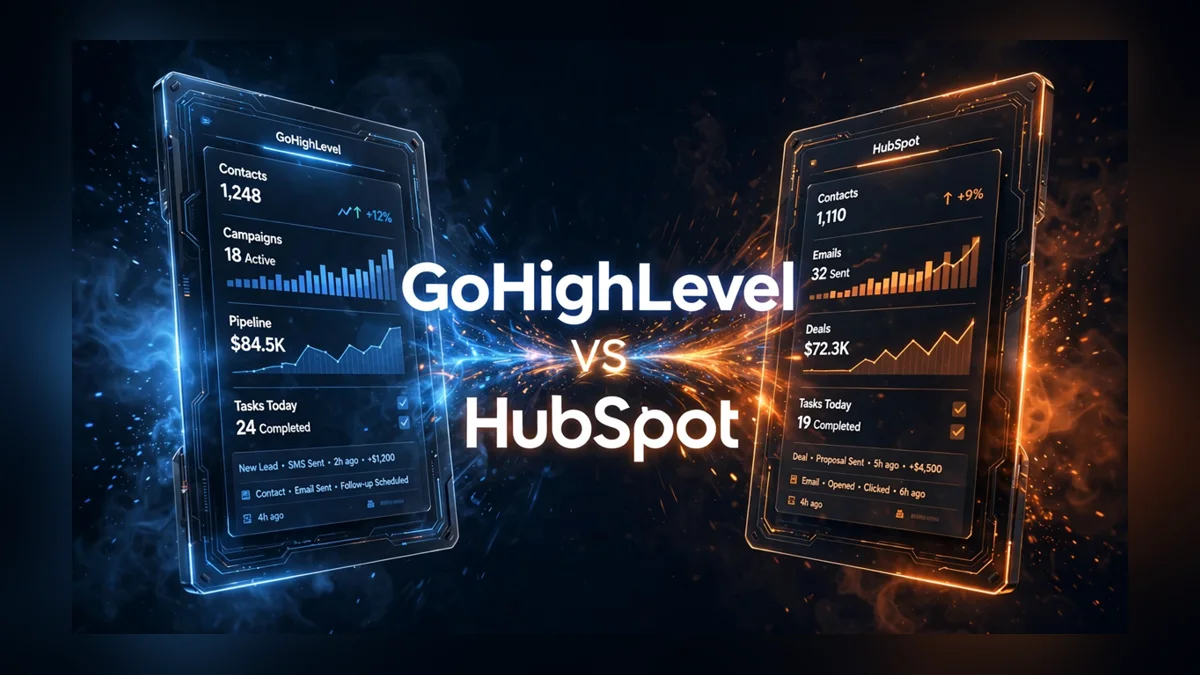
Choosing the right sales and marketing engine can make or break your team’s daily workflow. When evaluating gohighlevel vs hubspot, businesses often find themselves torn between two completely different software philosophies designed for very different operating models.
HubSpot acts as an enterprise-grade inbound CRM built around unified customer data, whereas GoHighLevel operates as an all-in-one agency workstation with unlimited sub-accounts. According to vendor specifications as of 2026, HubSpot caps entry-tier marketing contacts while GoHighLevel provides flat-rate pricing regardless of database volume.
Short answer:
GoHighLevel is the better pick for marketing agencies and local service businesses that want flat-rate pricing from $97 per month, unlimited contacts and sub-accounts, and built-in funnels, SMS and scheduling. HubSpot suits scaling B2B teams that need a polished enterprise CRM, native integrations and advanced reporting, but expect costs over $1,000 a month at the Professional tier.
We may earn a commission if you buy through our links, at no extra cost to you.
Gohighlevel vs Hubspot
The gohighlevel vs hubspot decision depends on your core business model. GoHighLevel offers flat pricing with unlimited contacts and sub-accounts. It works best for marketing agencies and local client management.
HubSpot provides superior polish, native integrations, and advanced reporting. It fits scaling B2B teams with large operational budgets.
The Fundamental Difference Between GoHighLevel and HubSpot
The primary architectural difference comes down to ecosystem versus consolidation. HubSpot functions as a centralized customer relationship management platform that scales upward into distinct hubs for marketing, sales, service, and operations. Each hub connects deeply into a shared database.
This setup creates clean reporting across enterprise revenue teams.
GoHighLevel takes the opposite approach by bundling funnel building, two-way SMS messaging, appointment scheduling, and multi-client sub-accounts into a single flat-rate license. Instead of paying extra fees for every seat or 1,000 new contacts, agency owners can run multiple client accounts under a single master dashboard. Many founders who compare software built for conversion funnels eventually run into this exact fork in the road.
For service-based companies needing granular SMS nurturing, GoHighLevel relies on direct carrier connections. Users register their campaigns under cellular compliance guidelines monitored by the CTIA to prevent message filtering. HubSpot, by contrast, targets corporate web-driven lead capture where email nurtures and organic discovery run the engine.
Core Feature Comparison: Where Each Platform Wins
Feature balance shifts dramatically depending on whether your day involves managing client pipelines or analyzing multi-touch sales attribution. Both platforms offer marketing automation, but their day-to-day execution feels worlds apart.
| Feature Area | GoHighLevel | HubSpot |
|---|---|---|
| Pricing Model | Flat monthly fee (unlimited contacts) | Tiered by contacts and paid user seats |
| Client Management | Unlimited distinct sub-accounts | Single portal (enterprise multi-portal add-on) |
| Funnels & Pages | Built-in drag-and-drop funnel builder | CMS Hub / landing pages on tiered plans |
| Native SMS | Two-way automated SMS & MMS | Integration dependent / third-party apps |
| Ecosystem & Apps | Custom webhooks & private app store | 1,500+ verified marketplace integrations |
Lead Capture, Funnels, and Landing Pages
GoHighLevel includes a full funnel builder inspired by traditional conversion software. You can clone entire landing page systems across accounts using built-in snapshot templates. This feature helps service providers launch client campaigns within minutes.
HubSpot provides a refined landing page designer focused on dynamic personalization. Its content management features let you serve distinct page modules based on a visitor’s lifecycle stage or geographic location.
CRM Architecture and Deal Pipeline Management
HubSpot delivers one of the most reliable CRM architectures in the industry. Its visual deal pipelines, custom object schemas, and automated stage progression make lead handoffs effortless between sales reps.
GoHighLevel supports pipeline stages and opportunity cards, but its custom property management feels less rigorous. Tracking deals works well for local service leads, though complex enterprise sales motions can stretch its data limits. Teams investing heavily in organic search growth often prefer HubSpot’s built-in attribution to trace revenue back to specific blog posts.
Workflow Automation and Omnichannel Messaging
Workflow automation in GoHighLevel excels at multi-channel communication. A single workflow trigger can send an SMS, initiate an automated phone call, ping a contact via WhatsApp, and trigger a Facebook direct message. The missed-call text-back feature alone saves thousands in lost revenue for local shops.
HubSpot workflow automation focuses on internal data hygiene and high-level nurture logic. It automatically rotates leads, updates lifecycle properties, creates follow-up tasks, and syncs data across connected business tools. For companies running modern automated sales systems, HubSpot provides enterprise stability without manual database maintenance.
Email Marketing and Deliverability Performance
HubSpot includes native mail servers configured for maximum inbox delivery right out of the box. The platform enforces strict list hygiene standards, which protects deliverability across shared IP pools.
GoHighLevel requires you to connect external email infrastructure such as Mailgun or its internal LC Email system. While this separation gives you complete control over your technical sending domains, your team must configure DKIM, SPF, and DMARC records manually to maintain high delivery rates.
Real-World Pricing and the True Cost of Ownership
Software licensing costs represent the widest gulf between these two options. GoHighLevel charges $97 per month for its Starter plan and $297 per month for the Unlimited plan. Agencies wanting to re-bill software services directly to their clients typically pick the $497 SaaS Pro plan.
Your software expense stays steady whether your database holds 500 contacts or 500,000 contacts.
HubSpot starts with accessible free tools, but costs climb quickly as your operations expand. The Starter Customer Platform begins at roughly $15 to $20 per seat each month. However, scaling to the Professional tier jumps costs to over $1,000 monthly, often paired with mandatory onboarding fees exceeding $3,000.
The biggest operational risk with HubSpot is contact creep. Adding 5,000 or 10,000 marketing contacts to a Professional tier pushes monthly invoices up significantly. Businesses managing broad consumer lists often experience severe bill shock as their audience expands.
The User Experience: Interface Polish vs. Raw Versatility
Working inside HubSpot feels smooth and unified. Every menu, button, and report follows a shared design pattern. Marketing and sales staff rarely need technical help to run basic daily campaigns, which cuts down training time during employee onboarding.
GoHighLevel packs dozens of individual utilities into a left-hand navigation sidebar. The interface provides incredible power, but updates can occasionally shift menu layouts or trigger minor software bugs. Setting up client sub-accounts requires a patient administrator who understands DNS settings, phone number provisioning, and campaign triggers.
For smaller organizations juggling essential digital growth platforms, software that works reliably without maintenance overhead is worth every penny. HubSpot delivers that polished user experience, while HighLevel trades design simplicity for raw utility and functional freedom.
Best Use Cases: Which Tool Fits Your Business Model?
Choosing the right platform comes down to how your company generates revenue and who uses the system every day. If you run a marketing agency, manage local service clients, or want to resell white-label software, GoHighLevel is almost always the better option. Its ability to duplicate setup snapshots, provision local phone numbers, and manage distinct sub-accounts without added software fees makes it an unbeatable agency utility.
If you operate a B2B SaaS company, manage a dedicated enterprise sales team, or run an inbound content operation, HubSpot is the stronger pick. The platform handles complex sales pipelines, deep contact segmentation, and cross-department collaboration with ease. Teams that rely heavily on organic search, lead scoring, and structured sales reporting will find HubSpot’s data architecture far superior.
Entrepreneurs selling digital products or training memberships also face unique requirements. While some founders evaluate standalone course creation tools, GoHighLevel includes functional membership portals directly inside its standard monthly plan. HubSpot can support gated assets, but doing so generally requires its dedicated Content Hub or expensive third-party integrations.
Common Implementation Traps to Avoid
The most common mistake with GoHighLevel is ignoring carrier registration requirements for text messaging. Recent cellular industry standards require businesses to complete strict A2P 10DLC registration before sending outbound marketing text messages. Skipping this setup results in immediate message failure across major telecom networks.
Agency owners must plan for this verification window when onboarding new clients.
With HubSpot, the most painful trap is failing to purge unengaged contacts from your marketing database. Storing cold leads or old newsletter signups pushes your account into higher pricing brackets unnecessarily. You should set up automated list-cleaning routines that archive inactive contacts before your monthly billing cycle renews.
Another common pitfall involves migrating messy contact databases. Moving poorly tagged leads from legacy
systems into GoHighLevel often creates broken automated triggers. On HubSpot, uploading unstructured data without defined custom properties ruins deal reporting across the entire pipeline.
Our Verdict
Our verdict: choose GoHighLevel if you run a marketing agency or local service business and want flat-rate pricing, unlimited sub-accounts and built-in funnels, SMS and scheduling in one dashboard. Choose HubSpot if you run a scaling B2B or enterprise sales team that needs a polished CRM, clean data and advanced reporting, and can absorb costs that climb past $1,000 a month.
Related reading: For another CRM comparison, see our HubSpot vs Salesforce guide.
Frequently Asked Questions
Can GoHighLevel completely replace HubSpot?
GoHighLevel can replace HubSpot for businesses focused on lead generation, local client management, appointment scheduling, and automated messaging. However, it cannot match HubSpot for complex enterprise sales tracking, advanced custom object relationships, or native CMS personalization.
Why is HubSpot so much more expensive than GoHighLevel?
HubSpot charges based on the total number of marketing contacts and dedicated user seats. It targets established mid-market and enterprise businesses that require guaranteed uptime, advanced security permissions, dedicated phone support, and native integrations with enterprise platforms like Salesforce.
Is GoHighLevel difficult to learn for beginners?
GoHighLevel has a steep initial learning curve because it consolidates so many disparate marketing tools. Setting up custom domains, DNS records, SMS compliance profiles, and automated workflow triggers requires technical patience compared to HubSpot’s guided onboarding process.
Does GoHighLevel offer native email sending?
GoHighLevel provides its own LC Email network, but users can also connect external SMTP services like Mailgun or SendGrid. You must configure your own DNS records, including SPF, DKIM, and DMARC entries, to ensure strong inbox deliverability.
Which platform is better for local service businesses?
GoHighLevel is noticeably better for local businesses like contractors, dental clinics, and real estate agencies. Features like automated missed-call text-back, Google review generation, and two-way SMS conversations drive direct local conversions without requiring third-party plugins.
The Verdict: How to Choose Between HighLevel and HubSpot
If your priority is reducing monthly software overhead while scaling marketing services for multiple clients, choose GoHighLevel. The unlimited sub-account model, integrated funnel builder, and multi-channel messaging suite let you operate an entire marketing firm from a single dashboard. You trade visual polish and simple setup for unmatched cost efficiency and operational flexibility.
If your priority is data integrity, clean user experience, and sophisticated inbound lead attribution, choose HubSpot. Growing sales teams that need frictionless pipeline tracking and deep CRM reporting will quickly outgrow HighLevel’s native architecture. HubSpot requires a much larger financial investment, but its enterprise stability and seamless integrations justify the cost for scaling B2B organizations.
Review our detailed implementation guides to plan your migration before locking your team into an annual software contract.

Similar Posts





















[…] can create custom properties, pipeline stages, and lead rotation rules in minutes. If you are also evaluating mid-market sales software, you will recognize how valuable native, unified data storage is for clean […]
[…] breadth-versus-simplicity trade-off shows up in all-in-one marketing suites too. Still, when a client asks "how many people search this?", Semrush gives you an […]