Semrush vs Ahrefs: Which SEO Tool Wins in 2026?
Editor & Lead Reviewer, ToolsProZone

Picking the right software often comes down to semrush vs ahrefs. Both platforms promise total visibility into organic search rankings and competitor strategies. Yet picking the wrong platform can drain your monthly software budget fast.
You need clear data before committing to an annual plan.
Official platform documentation confirms both suites maintain keyword indexes exceeding 25 billion search queries worldwide. Semrush functions as an all-in-one marketing suite with native advertising analysis. Ahrefs focuses squarely on crawler architecture and deep backlink discovery.
Let’s break down how their real-world capabilities compare.
Short answer:
Semrush is best for multi-channel marketers managing SEO and paid search, while Ahrefs is best for link builders and technical SEOs. Semrush starts at $139.95 a month with daily rank tracking; Ahrefs starts at $129 a month with a 500-credit pool. Pick Semrush for PPC and all-in-one marketing, Ahrefs for backlinks and crawling.
We may earn a commission if you buy through our links, at no extra cost to you.
Semrush vs Ahrefs
Semrush is best for multi-channel marketers managing SEO and paid search. Ahrefs is best for link builders who prioritize backlink index accuracy. Semrush provides daily rank tracking on standard subscription tiers.
Ahrefs uses a credit system that consumes points with every report click. Both platforms provide massive keyword databases covering hundreds of countries.
The Core Dilemma: Why Choosing Between Semrush and Ahrefs Is Tougher Than Ever
Choosing between these two platforms used to be simple. Marketers picked Ahrefs for link building and Semrush for paid search. Today, both companies compete across the exact same workflows.
As of 2026, both platforms have evolved into massive digital marketing engines. Semrush expanded from organic search into PR tracking, content optimization, and local citation management. Ahrefs rebuilt its entire backlink index and developed its own proprietary web crawler infrastructure.
This feature overlap makes the decision harder for growing businesses. If you run a lean agency, you rarely have budget for both subscriptions. Subscribing to high-tier plans on both platforms easily costs thousands of dollars each year.
You must decide whether you need an all-in-one marketing toolkit or a specialized technical crawler. Teams that handle pay-per-click advertising alongside organic content often gravitate toward dynamic marketing platforms that bundle paid channels together. Teams that focus strictly on pure organic search and link acquisition usually examine crawl mechanics first.
Both tools pull data from different sources. Semrush blends clickstream panels with third-party search data and direct merchant integrations. Ahrefs maintains AhrefsBot, which regularly ranks among the most active commercial web scrapers on the internet.
The differences lie in how they process that data. The way they calculate search traffic, score keyword difficulty, and meter user actions creates stark operational divides.
Keyword Research: Keyword Magic Tool vs. Keywords Explorer
Keyword research forms the foundation of every organic search campaign. Your chosen tool must deliver reliable search volumes, sensible intent grouping, and accurate competition metrics.
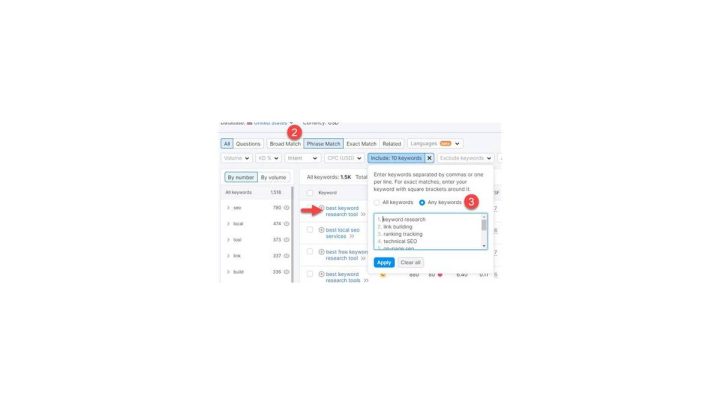
The Semrush Keyword Magic Tool focuses on sheer volume and rapid grouping. You enter a seed term, and the system instantly categorizes millions of variations into topical folders. These sub-groups allow you to build topical clusters in minutes.
Semrush also automatically labels search intent for every single term. It flags keywords as Informational, Navigational, Commercial, or Transactional. In our research, these intent labels align closely with real-world SERP layouts.
Ahrefs Keywords Explorer approaches research from an entirely different angle. Instead of looking only at search volume, Ahrefs emphasizes clicks and searcher behavior. A query might have 5,000 monthly searches, but if Google answers it directly, nobody clicks.
Ahrefs solves this by displaying a Clicks metric alongside Search Volume. It shows you the percentage of searches that result in actual website visits.
Ahrefs also provides a metric called Traffic Potential. Instead of showing the volume of one isolated term, it calculates total search traffic earned by the top-ranking page across all its secondary rankings. This prevents you from underestimating low-volume terms that pull massive cumulative traffic.
| Keyword Metric / Feature | Semrush (Keyword Magic Tool) | Ahrefs (Keywords Explorer) |
|---|---|---|
| Primary Keyword Metric | Search Volume, Search Intent | Search Volume, Clicks, Traffic Potential |
| Grouping Capability | Automatic topical sub-folders | Parent Topic assignment |
| Intent Categorization | Native automated intent tags | Manual filtering by SERP features |
| SERP History | Available on higher tiers | Full historical SERP positions included |
| Multi-Engine Support | Google, with app extensions | Google, YouTube, Amazon, Bing, Yandex |
Semrush holds an advantage for rapid editorial ideation. You can filter by phrase match, related terms, and questions with a single click. It also highlights SERP features directly within the main keyword list.
Ahrefs wins when you need deep SERP analysis. The Parent Topic feature determines whether you can rank for your seed keyword with a broader guide. That single feature stops content creators from publishing cannibalizing articles for closely related queries.
Backlink Intelligence: Comparing Crawl Freshness and Index Size
Backlink analysis is the proving ground where Ahrefs built its reputation. Knowing who links to your competitors allows you to replicate their digital footprint.
Web webmasters understand that crawler efficiency determines index quality. According to official Google Search Central documentation, discovery of new pages requires aggressive crawl scheduling. AhrefsBot excels in this exact area, refreshing its live link index every few minutes.
Ahrefs Site Explorer organizes links into distinct categories: All, Broken, and Lost. The lost links report tells you precisely when an external page removed your backlink. This allows your outreach team to run reclamation campaigns before value decays.
Ahrefs uses Domain Rating (DR) and URL Rating (UR) to calculate link equity. DR measures backlink profile strength on a logarithmic scale from 0 to 100. It measures only link popularity, ignoring search traffic or spam flags.
Semrush uses Authority Score (AS) for domain evaluation. AS combines backlink counts, organic search traffic, and spam signals into one combined score. This composite calculation prevents spam sites with high link counts from showing artificially inflated authority.
Semrush also includes a dedicated Link Building Tool. This feature scans your competitor profiles, discovers prospect opportunities, and connects directly to your email provider. You can conduct link outreach directly inside the Semrush interface without purchasing external outreach software.
Ahrefs does not offer integrated email outreach. It requires you to export CSV lists into third-party cold email software. If you run client outreach campaigns, the native Semrush workflow saves hours of spreadsheet manipulation.
If your primary goal is forensic link analysis, Ahrefs remains exceptionally sharp. Its historical backlink index lets you inspect link profiles dating back over a decade. Semrush has narrowed the gap in total raw link counts, but Ahrefs still presents link equity distribution with greater clarity.
Competitor Traffic Analysis: How Accurate Are Domain Estimates?
Neither Semrush nor Ahrefs possesses direct access to private website analytics. Every organic traffic number you see in both dashboards is an educated estimate.
Both tools calculate traffic by cross-referencing ranking positions with estimated search volume and average click-through curves. If a domain ranks first for a term with 10,000 monthly searches, the software assigns a standard percentage of visits to that page.
Aggregate user reviews show that Semrush estimates generally lean higher than Ahrefs. Semrush captures more long-tail keyword variations across international markets. This broad capture rate makes domain estimates look larger for global websites.
Ahrefs tends to produce more conservative traffic estimates. Its algorithm filters out low-confidence queries and focuses on high-visibility positions. For large consumer portals, Ahrefs numbers often track closer to verified analytics trends.
For small niche sites, both tools struggle with accuracy. Zero-volume keywords often drive hundreds of targeted visits in the real world. Because third-party scrapers miss these obscure terms, both platforms will underreport traffic for young sites.
Semrush offers a separate enterprise add-on called Traffic Analytics. This module models total web traffic, including direct, referral, social, and paid visits. It behaves like an external analytics engine for your competitors, tracking metrics like bounce rate, session duration, and audience overlap.
Ahrefs limits its competitor traffic data to organic search and paid Google Ads. It does not attempt to estimate total multi-channel web visits. If you only care about organic search visibility, Ahrefs gives you everything you need without extra add-on fees.
Technical SEO Auditing: Crawl Configurations, JavaScript, and Core Web Vitals
Technical issues can sink your rankings regardless of how many backlinks you build. Both platforms feature cloud-based site crawlers that spot broken links, redirect chains, and missing metadata.
The Semrush Site Audit module breaks errors down into three rigid categories: Errors, Warnings, and Notices. Errors demand immediate developer intervention. Warnings highlight secondary issues like duplicate meta tags, while Notices highlight informational items like external nofollow links.
Semrush integrates Core Web Vitals checks directly into its automated site audits. It pulls performance data from the Chrome User Experience Report, highlighting slow Largest Contentful Paint (LCP) and Cumulative Layout Shift (CLS) issues.
Ahrefs Site Audit uses a visual dashboard that organizes technical health into customizable issue buckets. It tracks performance over time using clean historical graphs. You can inspect exact crawl paths to understand how search bots navigate your internal site architecture.
Both crawlers can execute JavaScript. This feature is vital for websites built on React, Angular, or modern headless platforms. If your site relies on client-side rendering, you must turn on JavaScript crawling to see what search engines actually process.
Our evaluation of crawler flexibility shows that Ahrefs provides superior custom filtering. You can create nested rules using Boolean logic to isolate technical issues across specific URL paths.
Semrush provides more actionable, step-by-step instructions for non-technical users. Each error card features a dedicated button explaining why the issue matters and how to fix it. Marketers evaluating software options for smaller teams often find this educational guidance reduces reliance on outside technical contractors.
Rank Tracking: Daily Precision vs. Scheduled Sampling
Rank tracking shows whether your optimizations produce real-world results. A good tracker must report movements accurately, capture local SERP features, and update frequently enough to catch algorithmic shifts.
Semrush Position Tracking provides daily data updates across all subscription tiers. You do not pay extra fees for daily refreshes. If Google rolls out a core update overnight, you see the impact in your morning report.
Semrush also tracks mobile and desktop results as separate devices within the same project. You can track hyper-local positions down to a specific city, postal code, or street address. This geographic precision makes it valuable for multi-location retail brands.
Ahrefs Rank Tracker handles updates differently depending on your billing tier. On entry-level Lite plans, the system updates ranking positions once every seven days. If you require daily tracking updates, you must pay for an expensive add-on.
Ahrefs compensates for this slower update cycle with its visual reporting interface. The Share of Voice (SoV) metric tracks the percentage of all organic clicks going to your brand compared to tracked competitors. This metric helps executives understand high-level market visibility without getting lost in keyword minutiae.
If you report to agency clients who demand daily movement tracking, Semrush is the practical winner. Waiting a full week to confirm whether an algorithmic shift hit your site creates unnecessary blind spots.
If you view rank tracking as a long-term trendline, Ahrefs offers plenty of context. Its tag-based segmentation lets you group pages by product category, content type, or buyer stage. That organization makes top-level trend reporting remarkably painless.
Content Strategy and On-Page Optimization Workflows
Building content that ranks requires more than basic keyword research. You need structured outlines, semantic entity coverage, and clear optimization targets for your writing team.
The Semrush Content Marketing Platform acts as an editorial production suite. It includes Topic Research, which builds mind maps and identifies recurring audience questions across the web. You can review trending subtopics, popular headlines, and common user queries in a single screen.
Semrush also offers the SEO Writing Assistant. This tool connects directly to Google Docs, Microsoft Word, and WordPress. As you write, the plugin scores your text in real time based on readability, original tone of voice, keyword density, and semantic variations.
Ahrefs focuses content ideation around its Content Explorer module. Think of this tool as a private search engine indexed with billions of published web pages. You can filter the web to find pages with high organic traffic, low referring domain counts, and broken outbound links.
Content Explorer helps you find proven content formats that work in your niche. If you enter a topic, you can see which articles earned the most social shares or backlink mentions over the last two years. This allows you to model your editorial calendar around proven market demand.
Ahrefs lacks a native, real-time writing scoring plugin. To grade content against competitors while typing, you must export your terms or pair Ahrefs with external content tools. Semrush provides that complete end-to-end writing workflow natively.
PPC and Paid Advertising: Where One Tool Completely Pulls Away
If your digital marketing strategy includes paid search, this section settles the debate instantly. The gap between the two platforms in paid media analysis is substantial.
Semrush built its foundation on Google Ads intelligence. Its Advertising Research module allows you to enter any rival domain and uncover their entire paid search footprint. You can view the exact keywords they bid on, their estimated monthly ad spend, and their average cost per click.
Semrush stores years of historic ad copy creatives. You can see the exact headlines, ad text, and landing page URLs your competitors tested over the past several quarters. This insight helps you avoid spending budget on ad variations that rivals already tested and abandoned.
Semrush also provides Product Listing Ads (PLA) research. E-commerce teams can view competitor Google Shopping ads, complete with product pricing, images, and targeted search terms.
Ahrefs provides only basic paid search data inside Site Explorer. It displays the paid keywords a domain bids on, along with occasional ad copy snippets and landing pages.
However, Ahrefs does not track display advertising, PLA inventory, or historic ad creative timelines. The platform treats paid advertising as a secondary feature rather than an equal pillar.
If your team runs both organic and paid acquisition channels, Semrush stands alone. You can monitor organic competitors while reverse-engineering rival Google Ads campaigns from the same screen.
Everyday Usability: Interface Design, Data Filtering, and Learning Curves
A powerful tool is useless if your team finds it frustrating to operate every day. Both platforms handle complex datasets, but they present that information through very different design philosophies.
Ahrefs features one of the cleanest user interfaces in modern enterprise software. The layout uses consistent visual spacing, clean typography, and intuitive color-coded charts. New team members can navigate between link reports, keyword metrics, and SERP overviews with almost zero formal training.
The filtering engine inside Ahrefs is exceptional. You can combine multiple inclusion and exclusion filters using nested rules. For instance, you can isolate keywords with high volume, low difficulty, and specific word counts in two clicks.
The interface processes these complex filters almost instantly.
Semrush uses a more modular, menu-heavy interface. Because the platform includes social media tools, PR tracking, paid search, and market research, the navigation sidebar contains dozens of different tabs. Finding a specific sub-report often requires multiple clicks through dense sub-menus.
Semrush dashboards also pack a massive amount of data onto a single screen. This high data density benefits advanced analysts who want to review metrics without switching tabs. However, it can overwhelm entry-level marketers or clients reviewing reports for the first time.
If interface simplicity and snappy filtering matter most to your workflow, Ahrefs holds a clear edge. If you prefer having every possible digital marketing channel organized inside a single software ecosystem, the denser Semrush layout is worth learning.
The Real Cost: Subscription Tiers, Extra Seats, and the Ahrefs Credit Model
Software costs go beyond the sticker price listed on a pricing page. You must evaluate usage caps, team seat add-ons, and how daily work consumes monthly allowances.
| Subscription Feature / Limit | Semrush (Pro / Guru) | Ahrefs (Lite / Standard) |
|---|---|---|
| Base Monthly Cost (Monthly) | $139.95 / $249.95 | $129.00 / $249.00 |
| Included User Seats | 1 user | 1 user |
| Additional Seat Pricing | $45 to $80 per user / month | $20 to $40 per user / month (plus consumption fees) |
| Usage Metering Model | Daily query limits (3,000 to 5,000/day) | Monthly credit pool (500 credits standard) |
| Credit Burn on Filtering | No deductions for filters | Consumes credits on report clicks and custom filters |
| Tracked Projects | 5 to 15 projects | 5 to 20 projects |
Semrush operates on a daily query limit model. On the entry Pro tier, you can pull up to 3,000 reports every single day. Filtering an existing table, sorting a column, or opening a new sub-folder does not penalize your account.
Solo consultants rarely hit these generous ceilings.
Ahrefs uses a metered credit-consumption system that frustrates many active users. Base plans include 500 monthly credits. Opening a report, clicking an extra filter, or expanding a keyword list consumes credits from that monthly pool.
If you burn through your 500 credits mid-month, you must either buy additional credit packs or pause your work until the next billing cycle. For power users who spend hours refining data sets, these monthly limits disappear quickly.
Adding teammates also requires careful budgeting. Adding users to Semrush incurs a flat monthly fee per user, which can get expensive for larger agencies. Ahrefs charges lower per-seat base fees, but inactive users viewing reports can consume your shared monthly credit pool.
For solo consultants or agencies with heavy daily research volume, the Semrush billing structure offers greater peace of mind. You always know what your subscription covers without worrying about whether applying a filter will trigger an overage bill.
Feature Comparison Matrix: Semrush vs. Ahrefs at a Glance
Choosing between these platforms requires balancing specific features against day-to-day workflow demands. Both suites deliver deep functionality, but their core architectures prioritize different tasks.
The table below breaks down the primary operational capabilities across both toolsets.
| Capability | Semrush | Ahrefs | Advantage |
|---|---|---|---|
| Backlink Discovery Speed | Fast periodic refreshes | Real-time crawl updates | Ahrefs |
| Keyword Database Size | Over 25 billion keywords | Over 19 billion keywords | Semrush |
| SERP Feature Tracking | Comprehensive tracking | High-level tracking | Semrush |
| Search Intent Categorization | Automated on all tables | Manual SERP filter logic | Semrush |
| Organic Click Estimates | Algorithmic CTR models | Integrated Clicks metric | Ahrefs |
| PPC and Ad Copy Research | Full ad copy history and PLA | Basic paid keyword lists | Semrush |
| Rank Tracking Frequency | Daily updates included | Weekly updates (Standard) | Semrush |
| Outreach Workflow | Built-in email CRM | Requires external CSV export | Semrush |
| Technical Crawl Customization | Fixed category structure | Advanced Boolean filters | Ahrefs |
| Credit Deductions on Filters | No credit loss | Consumes monthly credits | Semrush |
This matrix highlights the foundational divide between both platforms. Semrush functions as a unified growth engine covering both organic and paid discovery. Ahrefs operates as a specialized technical intelligence platform optimized for link profiling and clean data manipulation.
Which Tool Fits Your Setup? Real-World Profiles and Use Cases
Every marketing operation operates under distinct constraints and client goals. Selecting the best platform depends on your specific organizational structure.
The Freelance SEO Consultant
If you operate as an independent consultant, your days involve auditing websites, researching keywords, and building content briefs. You need broad access to data without worrying about artificial usage ceilings.
Semrush is usually the safer choice for solo operators. You can run hundreds of daily queries, test keyword filters, and audit smaller client sites without burning monthly usage pools. The platform also lets you pitch paid search audits to prospective clients, giving you an extra service to sell.
If your solo consultancy focuses exclusively on technical audits and link prospecting, Ahrefs is worth the investment. Its data cleanliness lets you build client-ready backlink presentations with minimal spreadsheet cleanup. If you want to review our detailed software evaluation criteria, inspect our testing methodology to see how we benchmark these tools.
The Full-Service Digital Marketing Agency
Digital agencies juggle multiple disciplines under strict deadlines. Account managers must deliver weekly client reports covering organic rankings, Google Ads campaigns, and technical hygiene.
Semrush fits the multi-channel agency workflow better than almost any rival. Your organic search team and your media buying team can work within the exact same software ecosystem. You can white-label client PDF reports, automate weekly rank updates, and track competitor advertising spend from one central portal.
Ahrefs works well in boutique search agencies that specialize purely in link earning. If your agency does not manage paid search or client email outreach, Ahrefs gives your specialists deep crawl precision. However, you must carefully monitor team seat permissions to avoid rapid credit consumption.
The Content Publisher and Affiliate Marketer
Affiliate site owners and digital publishers rely heavily on identifying low-competition content gaps. You need to discover terms that drive engaged visitors without requiring massive backlink authority.
Ahrefs shines brightly for editorial publishers. Its Traffic Potential metric shows you exactly how much traffic the top-ranking page pulls across all related keywords. That metric prevents you from writing separate articles for search terms that Google already consolidates into a single SERP.
The Content Explorer tool also helps publishers locate link-building targets and unlinked brand mentions. If you are bootstrapping a new site on a tight budget, explore alternative lifetime software options to supplement your core toolset before paying enterprise subscription fees.
Costly Mistakes to Avoid Before Committing to a Plan
Signing up for an annual search marketing subscription represents a substantial financial commitment. Avoiding common operational pitfalls will save you thousands of dollars in wasted software spend.
Falling Victim to Credit Burn
Many new Ahrefs subscribers assume they can explore data freely throughout the month. Under the current credit framework, simple actions like applying a secondary filter consume monthly allowances.
Train your team to plan their queries before running reports inside Ahrefs. If you plan to analyze a large keyword list, apply your search volume and difficulty thresholds simultaneously. Running separate, iterative filters burns multiple credits for what should be a single research task.
Overbuying Tracked Project Slots
Both platforms restrict the number of active projects you can configure on base subscription plans. A project typically unlocks automated site auditing and ongoing position tracking for a specific domain.
Do not upgrade to an expensive subscription tier solely for extra project slots. If you manage multiple secondary domains, use the on-demand site audit features instead of creating permanent projects. You can run manual audits whenever needed, reserving permanent project slots for your highest-priority domains.
Overpaying for Inactive Team Seats
Adding extra users to your subscription account drives software costs up quickly. Agencies often add several team members who only log in once or twice per month to review reports.
Audit your seat utilization every quarter. Instead of assigning paid seats to occasional users, export shared CSV reports or schedule automated email deliveries. If your team manages technical maintenance across multiple client environments, pairing your SEO tools with dedicated WordPress maintenance utilities often proves more cost-effective than adding administrative seats.
Ignoring Search Engine Crawl Directives
When configuring technical site audits, ensure your crawlers respect established indexing guidelines. According to the standard robot exclusion guidelines published by the Internet Engineering Task Force, automated crawlers must parse robots.txt directives correctly to prevent server strain. Always check your crawl speed settings before launching deep audits on client sites hosted on shared infrastructure.
Our Verdict
Our verdict: choose Semrush if you manage multi-channel digital marketing, and choose Ahrefs if you operate as a dedicated technical SEO specialist or link builder. Semrush is usually the safer choice for solo operators, while Ahrefs is worth it if your work focuses exclusively on technical audits and link prospecting.
Related reading: If you are considering cheaper options, see our Semrush alternatives guide.
Frequently Asked Questions About Semrush and Ahrefs
Is Semrush better than Ahrefs for SEO beginners?
Semrush is generally better for beginners because it provides structured guidance alongside its data. The platform explains why technical issues matter and tells you how to resolve them. It also tags keyword intent automatically, which helps newer marketers choose terms that match user expectations.
Why did Ahrefs switch to a credit-based pricing model?
Ahrefs implemented usage credits to align software revenue with server computation costs. Crawling billions of pages and processing complex nested queries demands significant server power. The credit model ensures that high-volume enterprise scrapers pay more than casual users who view basic dashboards.
Which tool has more accurate keyword search volume?
Neither tool is perfectly accurate because both rely on blended third-party models. Semrush updates its database frequently and excels at capturing long-tail regional variations. Ahrefs provides superior click behavioral data, which helps you avoid queries where users rarely click search results.
Can you use Ahrefs for Google Ads and PPC research?
Ahrefs provides only basic paid search data. It shows the paid keywords a competitor bids on and displays basic text ad snippets. Semrush is far superior for paid media, tracking extensive ad copy history, display banner ads, and Google Shopping Product Listing Ads.
Does Semrush offer a free plan or free trial?
Semrush offers a free account with limited daily searches and one tracked project. It also provides 7-day trials on paid tiers if you sign up with a credit card. Ahrefs does not offer a free trial, though it provides free diagnostic tools for verified site owners via Ahrefs Webmaster Tools.
The Final Decision: How to Pick the Winner for Your Workflow
The choice between Semrush and Ahrefs comes down to how your business acquires customers. Both tools sit at the top of the search marketing software industry, but they solve different operational problems.
Choose Semrush if you manage multi-channel digital marketing. It remains the gold standard for teams that run organic search and paid Google Ads side by side. The generous daily query allowances, automated search intent classification, and native email outreach workflow make it an exceptional productivity suite.
Choose Ahrefs if you operate as a dedicated technical SEO specialist or link builder. Its crawler infrastructure, historical link indices, and clean user interface remain best in class. If you value deep data filtering and click-behavior metrics above all else, Ahrefs will serve your business well.

Similar Posts

























[…] of web pages daily to build comprehensive market indexes. Industry professionals frequently weigh head-to-head performance metrics between these two market […]